My Mom and I hit some estate sales yesterday morning. It's been months since I've been out due to my morning sickness! I was so happy to be out there again. Unfortunately the sales were dismal, but I still managed to pick up a couple cool items.
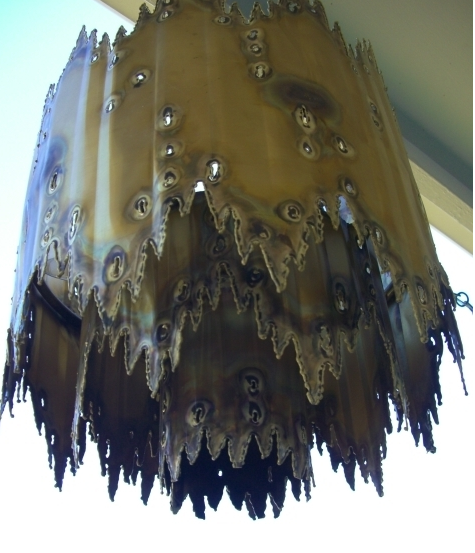
My favorite is this Brutalist candelabra. They wanted $70 for it (yikes!) but I ended up getting it for $10. Of course the intent was to list it in my Etsy shop, but like many other things I buy, the moment I got it home it found its permanent place. It's atop my Brasilia dresser in the entry and looks fantastic.
Showing posts with label brutalist. Show all posts
Sunday, July 10, 2011
Friday, November 5, 2010
Brutalist Architecture and it's following Art
What makes something Brutalist? And what is Brutalism?
The terms Brutalist and Brutalism were coined by architects Alison and Peter Smithson in 1953. The words are derived from the phrase "Beton Brut" which translates to raw concrete. Le Corbusier, a swiss architect known for his role in modern architecture, used Beton Brut to describe the poured board-marked concrete with which he constructed many of his post-World War II buildings.
And much like furniture that was inspired by buildings, think Broyhill's Brasilia line, art was born from the stunning lines and striking presence of the new modern buildings of this time. Insert Brutalist Art. What is it? It's a highly recognizable art, much like the Brutalist buildings, with geometric hard lines, and a feeling of exposed "guts" and materials.
C. Jere, a pen name created by 1960's metalwork artists (and brother-in-laws) Curtis Freiler and Jerry Fels, command the primary recognition of Brutalist art. Their goal was to produce "gallery quality art for the masses". I think they accomplished that. You can definitely see the Brutalist inspiration in their art:
The terms Brutalist and Brutalism were coined by architects Alison and Peter Smithson in 1953. The words are derived from the phrase "Beton Brut" which translates to raw concrete. Le Corbusier, a swiss architect known for his role in modern architecture, used Beton Brut to describe the poured board-marked concrete with which he constructed many of his post-World War II buildings.
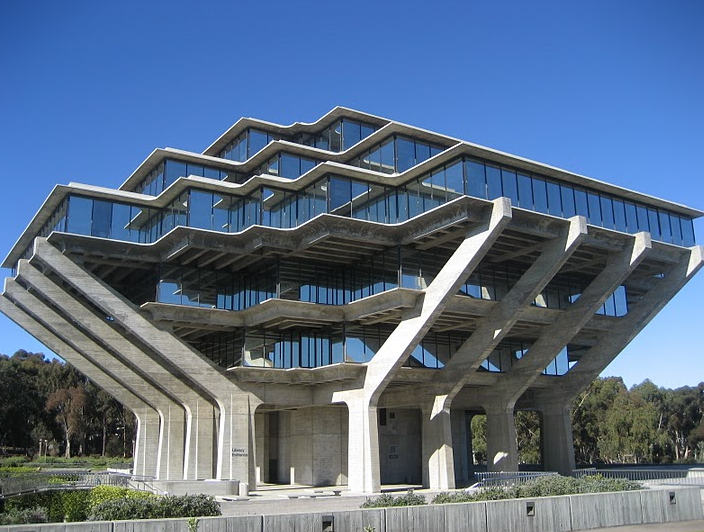
So what do Brutalist buildings look like? They share repetitive angular lines, and are typically made with concrete, though you will also recognize this style through the use of rough, blocky shapes and exposed materials and forms. Here are some classic examples:
Geisel Library at University of California San Diego
Habitat 67 Apartment Buildings in Montreal Quebec Canada
The Torre Velasca in Milan
And much like furniture that was inspired by buildings, think Broyhill's Brasilia line, art was born from the stunning lines and striking presence of the new modern buildings of this time. Insert Brutalist Art. What is it? It's a highly recognizable art, much like the Brutalist buildings, with geometric hard lines, and a feeling of exposed "guts" and materials.
C. Jere, a pen name created by 1960's metalwork artists (and brother-in-laws) Curtis Freiler and Jerry Fels, command the primary recognition of Brutalist art. Their goal was to produce "gallery quality art for the masses". I think they accomplished that. You can definitely see the Brutalist inspiration in their art:
Birds in Flight
Flower Wall Sculpture
I want it!
Maple Leaf Sculpture
Raindrops
Chandelier
Update: example of Brutalist furniture:
and check out this post on Mr. Modtomic's blog

Labels:
architecture,
art,
beton brut,
brutalism,
brutalist,
c. jere,
concrete,
etsy,
le corbusier,
mid century,
modern,
rhan,
vintage
Subscribe to:
Posts (Atom)